
Ask Staley Electric: Are Outdoor Outlets Waterproof? And Other Questions Homeowners and Inflatable Snowmen Are Asking
Heavy spring rains, summer humidity, the occasional winter freeze. Mother Nature throws a lot at Central Arkansas homes, outdoor electrical outlets included. And the question on every (yes, every) homeowner’s mind this time of year: Are my outdoor outlets actually waterproof?
Short answer. No. Outdoor outlets are designed to resist weather, but they’re not completely waterproof. The right outlet, a properly fitted weatherproof cover and GFCI protection all work together to keep water out and reduce the risk of electrical shock.
So before you inflate Frosty and light up your home for the holidays, learn how to protect outdoor outlets from rain and more. Our Staley Electric experts are a wealth of knowledge when it comes to outdoor outlets. And hey, knowledge is power.
Can My Outdoor Outlets Get Wet? Are They Safe to Use in the Rain?
Outdoor outlets are built to handle exposure to the elements, but that doesn’t mean water should get inside them. A properly installed weather-resistant outlet with an appropriate cover can be used outdoors, including during rainy weather, provided the outlet and connections remain protected.
The real trouble starts when moisture makes its way into the electrical box or plug connections. Water can lead to corrosion, damaged connections and tripped GFCI protection. In some cases, it can create a shock or fire hazard.
That’s why outdoor outlets need more than a plastic lid. They need the right protection for how and where they’re being used.
Do Outdoor Outlets Need to Be Covered?
Yes. Outdoor electrical outlets need weatherproof covers designed to protect them from rain, moisture and debris. And if you regularly leave something plugged in outside, the type of cover matters.
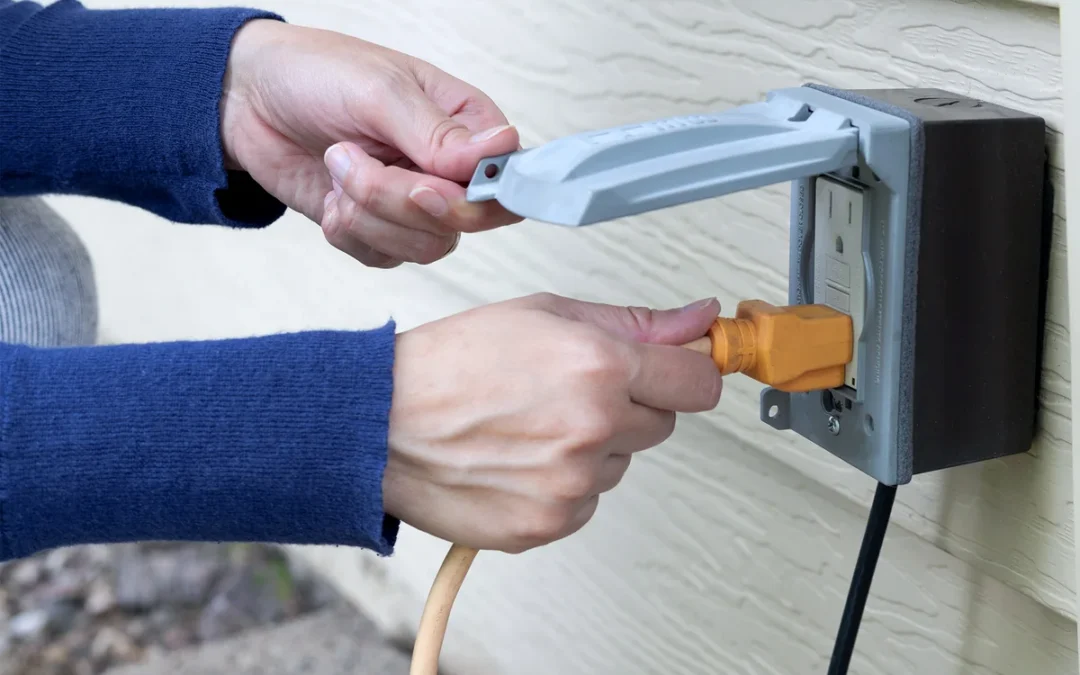
At Staley Electric, we recommend extra-duty in-use covers, sometimes called bubble covers. Unlike older flat flip-lid covers, these allow the outlet to remain protected even when a cord is plugged in. The cover closes around the cord, helping prevent water from reaching the electrical connection.
In Central Arkansas, heavy-duty polycarbonate and die-cast metal covers tend to hold up best.
What Goes Wrong With Outdoor Outlet Covers?
The most common problem our electricians encounter is an older flat-style cover that only protects the outlet when nothing is plugged in.
Once someone plugs in patio lights, holiday decorations or outdoor equipment, the lid stays open and leaves the connection exposed.
Other common problems include:
- Cracked plastic from prolonged sun exposure
- Broken hinges that prevent covers from closing
- Missing or dried-out gaskets
- Covers too shallow to close over timers or adapters
- Damaged electrical boxes or deteriorated caulking that allows water inside
- Cheap, thin plastic covers can become brittle after years of exposure to UV rays.
Current electrical code requirements generally call for weather-resistant receptacles, GFCI protection and appropriate in-use covers in outdoor locations.
If your outdoor outlets still have older covers, ask us about upgrading them during an outdoor outlet installation or electrical service visit.
How Do I Protect My Outdoor Outlets From Rain?
The best protection starts with weather-resistant outlets, properly fitted in-use covers and functioning GFCI protection. Homeowners can also reduce moisture exposure by keeping outdoor connections off the ground and checking covers for visible damage.
A few smart habits can help:
- Keep outlet covers closed when outlets aren’t being used.
- Avoid leaving extension cord connections on the ground or in puddles.
- Use only extension cords and electrical products rated for outdoor use.
- Check for cracked covers, broken hinges and missing seals.
- Avoid overloading outlets with multiple devices or decorations.
- Have damaged outlets, covers or electrical boxes inspected and repaired by an electrician.
If an outlet is already wet, damaged or showing signs of corrosion, don’t use it until it’s been evaluated. Replacing outdoor outlets, modifying wiring or installing new GFCI protection should be handled by a qualified electrician.
Why Did My Outdoor Outlet Stop Working After Rain?
Most of the time, the first thing our electricians find is a tripped GFCI. But the outlet that stopped working isn’t always where the reset button is located.
Outdoor outlets may be protected by a GFCI located in the garage, bathroom or basement. That can leave homeowners searching for a reset button that isn’t anywhere near the outdoor outlet. A GFCI is designed to interrupt power when it detects a ground fault, helping protect people from electrical shock. Learn more about how a GFCI outlet works.
If an outdoor outlet stops working after a storm, you can check for a tripped GFCI and try resetting it once when the area is dry and safe. If it won’t reset, don’t keep pressing the button.
Staley electricians frequently trace these problems to:
- Water inside the electrical box
- Corroded terminals
- Worn-out GFCI outlets
- Cracked boxes or damaged covers
- Missing gaskets or failed seals
GFCI outlets don’t last forever. Years of exposure to moisture can take a toll on their reliability. If the problem continues, schedule outlet repair or professional GFCI outlet installation.
If the circuit breaker has tripped, review our guide on how to safely reset a tripped breaker. Never repeatedly reset a breaker that continues to trip.
What Outdoor Outlet Mistakes Cause Problems With Holiday Lights?
Holiday lights, inflatable decorations and outdoor timers can put a surprising amount of demand on a home’s electrical system. And when rain enters the picture, the problems can multiply.
At Staley Electric, we see several common mistakes during the holiday season:
- Connecting more light strands together than the manufacturer recommends
- Using indoor extension cords outdoors
- Running cords through doors or windows where they can become pinched
- Plugging too many decorations into one outlet or shared circuit
- Leaving plug connections on the ground where rainwater collects
- Using staples or nails that damage electrical cords
One of the biggest offenders? Plug connections sitting in puddles. It’s a common reason GFCI outlets trip when holiday decorations are running. Before hanging the lights, take a look at our holiday light safety tips.
When Should I Stop Resetting an Outdoor GFCI Outlet and Call an Electrician?
If your outdoor GFCI trips repeatedly, won’t reset or trips even when nothing is plugged in, it’s time to call an electrician. Repeated tripping can indicate moisture intrusion, damaged wiring or another electrical problem that needs attention.
If a GFCI trips once, you can unplug connected devices and try resetting it when everything is dry and safe. If it holds, reconnecting devices one at a time may help identify a faulty decoration or cord. Stop troubleshooting and contact Staley Electric if:
- The outlet trips with nothing plugged in.
- The GFCI won’t reset.
- The outlet trips every time it rains.
- You can’t locate the GFCI protecting the outdoor outlet.
- The outlet or cover feels warm or looks discolored.
- You notice corrosion, buzzing, sparks or a burning smell.
If you notice sparking, heat or a burning smell, stop using the outlet and keep clear of it until a professional can assess the situation.
And never replace a GFCI with a standard outlet just to stop it from tripping. That removes an important layer of shock protection.
When Should an Electrician Inspect or Replace an Outdoor Outlet?
If an outlet repeatedly stops working after rain, has a damaged cover or shows visible signs of wear, have an electrician inspect it before using it again.
Sometimes the solution is as straightforward as replacing a worn GFCI or upgrading an outdated cover. Other situations involve moisture inside the box, damaged connections or wiring that needs attention.
Staley Electric can evaluate the outlet, identify the cause and recommend the appropriate repair or upgrade.
And if you have loose outlets, those deserve attention too. An outlet that moves when you plug something in may have an underlying installation or connection issue.
The one thing Staley Electric wants you to remember about outdoor outlets? Weather-resistant doesn’t mean waterproof. Even an outdoor-rated outlet needs the right cover, GFCI protection and properly maintained electrical connections to stand up to Central Arkansas weather.
Have an outdoor outlet that keeps tripping, won’t reset or looks like it’s seen one too many Arkansas thunderstorms? Our local experts can help ensure your outdoor electrical system is ready for whatever the weather brings. Bring on the inflatable snow globes.