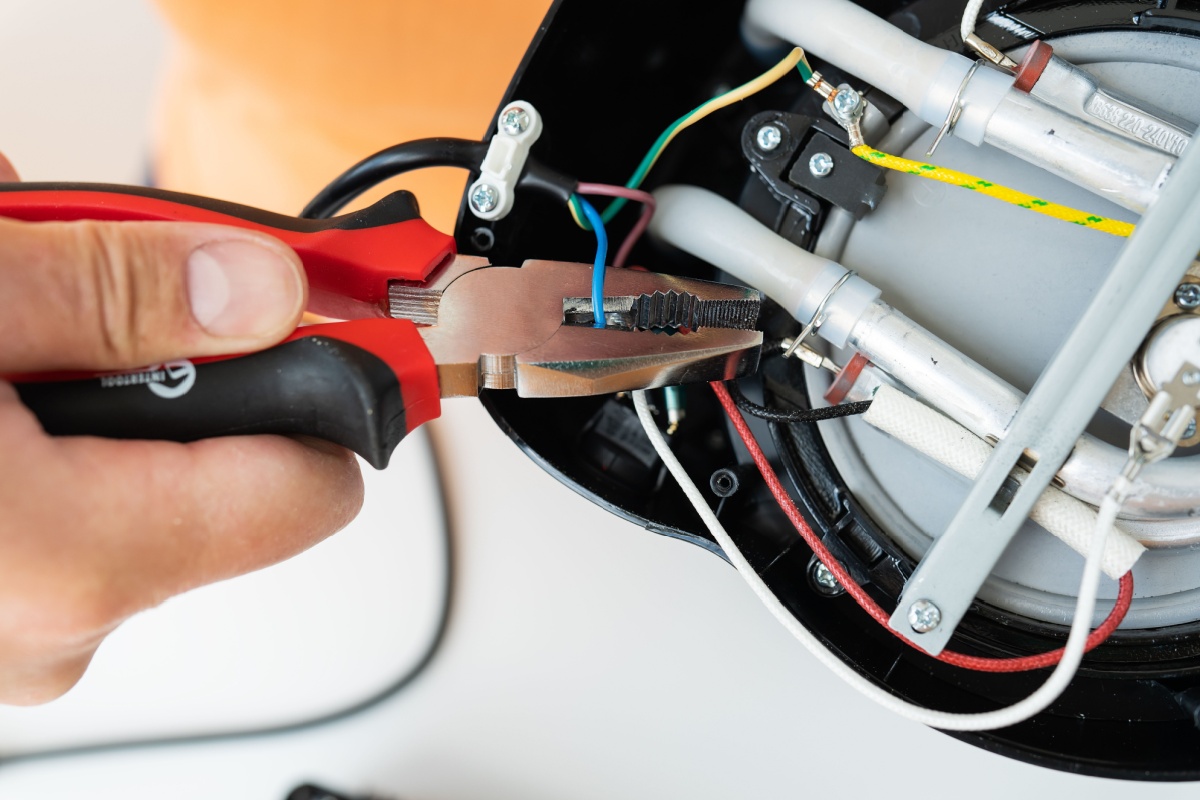
You watch a five-minute online video. The instructor makes it look simple. Turn off the breaker. Remove a few screws. Match the wires by color. Tighten everything back up. Suddenly, replacing that light fixture or outlet feels like an easy Saturday afternoon project.
But electrical systems are far more complex and hazardous than they appear on a screen. What looks straightforward can quickly turn dangerous if a wire is mislabeled, a breaker panel is improperly identified, or a connection is left slightly loose. Even small mistakes can lead to severe injuries, hidden fire hazards, or costly code violations that surface later during an inspection. While DIY projects can be rewarding in many areas of home improvement, electrical work requires professional training, specialized tools, and an understanding of safety standards.
The Hidden Dangers of Electrical Shock
Electricity is invisible. You cannot see it moving through wires behind your walls, and that invisibility makes it especially dangerous.
One of the most common DIY mistakes involves improperly shutting off power. Many homeowners flip the breaker they believe is correct, only to discover that the circuits are mislabeled or interconnected. Contact with a live wire can result in severe shock, burns, or even fatal electrocution.
Improper wiring techniques also increase risk. Reversing hot and neutral wires, failing to secure grounding connections, or stripping insulation too far back exposes conductive material. Even brief contact with energized components can disrupt heart rhythms or cause muscle contractions that prevent someone from letting go of a live wire.
Water exposure compounds the danger. Attempting electrical repairs in bathrooms, kitchens, or outdoor areas without proper ground-fault protection dramatically increases the risk of shock. Licensed electricians understand how to install and test GFCI devices to prevent these hazards.
Fire Hazards Caused by Improper Wiring
Not all electrical mistakes cause immediate injury. Some create hidden hazards that develop quietly over time.
Loose connections are a leading cause of electrical fires. When wires are not securely fastened to terminals, electricity can arc across gaps. That arcing generates intense heat, which can ignite surrounding materials inside walls.
Overloaded circuits present another danger. Adding new outlets or lighting without calculating load capacity can strain existing wiring. When circuits carry more current than they are rated for, insulation can degrade and overheat.
Incorrect breaker sizing is particularly risky. Some DIYers replace a frequently tripping breaker with a larger one, assuming it will solve the problem. In reality, that breaker may have been tripping to prevent overheating. Installing a higher-rated breaker without upgrading the wiring removes that safety protection and increases the risk of fire.
Because these hazards often remain hidden behind drywall, homeowners may not realize there is a problem until smoke appears or damage occurs. Professional electricians evaluate the entire system, ensuring connections are secure, circuits are balanced, and protection devices are correctly matched to wiring capacity.
Code Violations & Failed Inspections
Electrical codes exist to protect homeowners and communities. They are regularly updated to reflect new safety standards and technological advances.
DIY electrical work often fails to meet these requirements. Improper box fill calculations, missing junction box covers, insufficient grounding, or incorrect wire types can all result in violations. While these issues may go unnoticed initially, they often surface during home sales or renovation inspections.
Failed inspections can delay real estate transactions and require costly corrections. Insurance companies may also deny claims if fire damage is traced back to unpermitted or noncompliant electrical work.
Permits and inspections are not merely paperwork. They provide an additional layer of oversight that helps ensure safety. Licensed electricians understand local regulations in Little Rock and throughout Central Arkansas. They secure the necessary permits and complete work in accordance with established standards.
The Risk of Long-Term System Damage
Electrical systems function as interconnected networks. A mistake in one area can affect performance throughout the home.
Incorrect installations can strain panels by adding unbalanced loads or failing to distribute power evenly across circuits. Over time, this strain can reduce panel lifespan and increase the likelihood of breaker failures.
Appliances are also vulnerable. Sensitive electronics inside HVAC systems, refrigerators, and smart home devices rely on stable voltage. Improper wiring can create fluctuations that gradually damage internal components.
Even something as simple as a poorly installed dimmer switch can interfere with compatible lighting systems, leading to flickering or premature bulb failure. What begins as a small DIY project can ripple outward, affecting multiple parts of the home’s electrical infrastructure.
Professional electricians evaluate both immediate functionality and long-term performance. Their goal is to ensure that every installation supports system stability for years to come.
Why Professional Electricians Make the Difference
Professional electricians complete extensive training and apprenticeships. They understand electrical theory, load calculations, grounding systems, and code requirements. They carry proper licensing and insurance, which protects homeowners in the event of unexpected issues.
Permits and inspections are handled correctly. Work is completed using appropriate materials and tested to confirm safe operation. Rather than relying on trial and error, experienced electricians apply proven methods that meet industry standards.
Electrical projects should add value and reliability to your home, not uncertainty. When you partner with trained professionals, you gain confidence that the job is done right.
Trust Experience When It Matters Most
Electrical work is not an area to cut corners. The risks associated with improper wiring, overloaded circuits, and code violations can have lasting consequences for both safety and finances.
Now celebrating 75 years of business, Staley Electric has proudly served Little Rock and Central Arkansas with a steadfast commitment to safe, reliable electrical service. From small repairs to major upgrades, we approach every project with the same dedication to quality that began in R.E. Staley’s garage in 1951.
If you are considering an electrical repair or upgrade, skip the online tutorial and choose proven expertise instead. Contact Staley Electric today for safe, professional service you can trust.